


The holidays bring family, tradition, and a lot of unfamiliar food. For many parents, that last part brings stress.
Your picky eater may refuse everything except the dinner rolls. Your toddler may be ready to try new foods and if your child has a food allergy, a crowded buffet can feel risky.
At Village Pediatric Group, we hear these worries every November and December. Families from Tuckahoe, Bronxville, Eastchester, and across Westchester County ask similar questions. How hard should I push? Is this pickiness or something more? How do I keep my child safe at Grandma’s table?
Let’s learn how to tell picky eating from a possible allergy, and how to introduce new foods calmly.
Why Picky Eating Often Peaks Around the Holidays
Picky eating is a normal part of childhood. According to the American Academy of Pediatrics, it is especially common between ages 2 and 4.
Holidays can make it more noticeable. Routines shift, meals run late, and tables fill with unfamiliar dishes.
Kids often cope with change by sticking to what feels safe. This is usually a phase.

Picky Eating or Food Allergy? Knowing the Difference
Picky eating is about preference. A food allergy is an immune system reaction. The body mistakes a food protein for a threat.
CDC data from 2024 show that food allergy rises with age. About 3.9% of children ages 0 to 5 have a diagnosed food allergy. That grows to 6.9% among teens ages 12 to 17.
Food Allergy Research and Education (FARE) estimates the figure is closer to 1 in 13 children. Estimates often vary based on how allergies are measured.
Sometimes a picky child avoids a food for a real reason. Watch for these patterns:
- Consistent refusal of one food group, especially nuts, eggs, dairy, or seafood
- Saying a food makes their mouth or throat feel itchy or “funny”
- Hives, rash, or redness around the mouth after eating
- Vomiting, stomach pain, or diarrhea soon after a specific food
- Eczema flares that seem linked to certain meals
If you notice any of these, set that food aside for now. Then call our office to talk it through.
Hidden Allergens on the Holiday Table
The FDA recognizes nine major food allergens: milk, eggs, fish, crustacean shellfish, tree nuts, peanuts, wheat, soybeans, and sesame. Holiday dishes often contain several. Many might not obvious.
- Stuffing and dressing can include tree nuts, eggs, milk, or wheat.
- Pies and cookies often contain nuts, eggs, and butter.
- Eggnog and custards are typically made with eggs and dairy.
- Seafood traditions, like the Feast of the Seven Fishes, often feature shellfish.
- Dumplings, tamales, and latkes may include egg, wheat, sesame oil, or shrimp.
- Pesto, hummus, and dips can contain pine nuts or tahini, which is made from sesame.
About 40% of children with food allergies are allergic to more than one food, according to FARE. That makes ingredient checks especially important at shared meals.
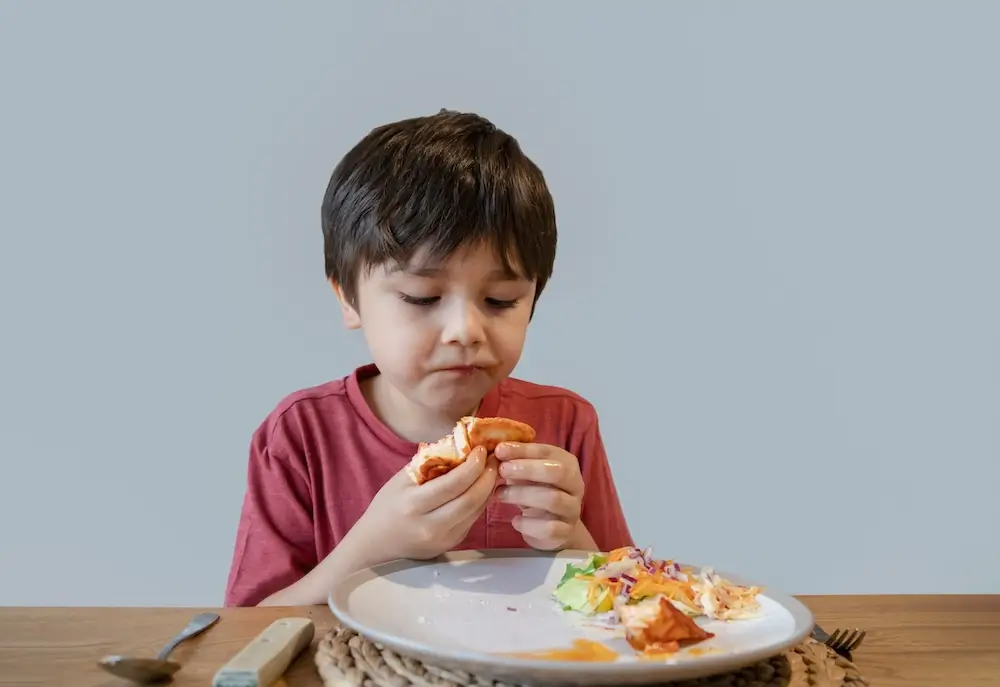
How to Introduce New Foods Without the Battle
The goal is curiosity, not a clean plate. Small, low-pressure moments tend to work better than big negotiations. These approaches often help:
- Pair new with familiar. Serve a small portion of a new dish beside a food your child already likes.
- Make it hands-on. Let kids wash vegetables, stir batter, or arrange a platter.
- Keep portions tiny. A pea-sized taste can feel far less scary than a full scoop.
- Model it yourself. Kids often copy what the adults around them eat.
- Skip the dessert bribe. Using sweets as a reward can make them seem more valuable.
Your words matter, too:
Instead of “Just one bite or no dessert.” Try instead: “This is cranberry sauce. It’s tart and a little sweet. Want to smell it?”
Instead of “You loved this last year!” Try instead: “Grandpa makes this every year. You can try it whenever you’re ready.”
Instead of “Clean your plate.” Try instead: “Listen to your tummy. Does it feel full?”
Introducing Allergenic Foods to Babies and Toddlers
A busy holiday party is rarely the best place for a first taste of peanut or egg. A reaction can be harder to spot in a crowd.
- Introduce at home, on a calm day, earlier in the day.
- Offer one new allergen at a time, so any reaction is easier to trace.
- Wait a few days before adding the next new allergen.
- Use safe textures. Whole nuts are a choking risk for young children. Thinned, smooth nut butter is typically safer.
A Holiday Safety Plan for Kids with Known Allergies
- Tell the host early. Share which foods to avoid and why.
- Bring a safe dish. That way your child has at least one reliable option.
- Serve your child first. This lowers the risk of cross-contact, when an allergen transfers to safe food by accident.
- Read every label, including gifted treats and store-bought desserts.
- Pack two epinephrine auto-injectors if prescribed. Check expiration dates before you travel.
- Coach older kids and teens to ask, “Does this have nuts in it?”
Our team can review your child’s allergy action plan in English, Spanish, Mandarin, or Cantonese.

When to Call Us and When to Call 911
Use epinephrine if prescribed and call 911 for signs of a severe reaction, called anaphylaxis:
- Trouble breathing, wheezing, or repeated coughing
- Swelling of the lips, tongue, or throat
- Widespread hives, especially with vomiting
- Paleness, dizziness, fainting, or sudden sleepiness
Call our office for concerns that are not emergencies. These might include:
- A mild rash after trying a new food
- Questions about allergy testing
- A list of accepted foods that keeps shrinking
- Frequent gagging or choking with certain textures
- Low energy, weight loss, or slowed growth
Our 24/7 on-call pediatrician can be reached during the holidays, too.
Enjoy the Season, One Small Bite at a Time
If you’re unsure whether it’s pickiness or a possible allergy, we’re here to help. Our pediatricians have cared for Tuckahoe and southern Westchester families since 2008.
Call our office to schedule a visit. We’re just a phone call away.
Medical Disclaimer: This article is for informational purposes only and does not constitute medical advice. Please consult your child’s pediatrician with any questions about your child’s health, diet, or possible allergies.