


Winter can be tough on children with sensitive skin. Cold temperatures, low humidity, and indoor heating can leave skin dry, itchy, and irritated. From eczema flare-ups to chapped lips, these common winter skin problems can make kids uncomfortable and fussy. The good news is that with proper care and preventive strategies, most winter skin issues can be managed effectively at home. You can help your child stay comfortable all season long!

Common Winter Skin Problems in Children
1. Dry Skin
Dry skin is one of the most frequent complaints in the winter months. Signs include rough, flaky patches, redness, and occasional itching. Babies and toddlers are prone to dryness because their skin barrier is more sensitive.
2. Eczema Flare-Ups
Children with eczema may notice worsening symptoms in the winter. The combination of dry air and indoor heating can trigger itching, redness, and inflammation. Eczema flare-ups can sometimes lead to discomfort and sleep disturbances. This means they need proactive care to combat these uncomfortable symptoms.
3. Chapped Lips and Cracked Skin
Chapped lips, cracked hands, and even dry cheeks are also common during colder months. Kids who spend time outdoors in windy, cold conditions are especially vulnerable. Licking the lips or scratching any itchy areas can make the problem worse.
4. Irritated Skin from Clothing
To stay warm, families usually dress their kids in thicker clothes and fabrics. Wool or rough fabrics can aggravate already sensitive skin. These layers of clothing trap sweat in and contribute to irritation, particularly in children with eczema or sensitive skin.
Practical Tips to Protect Your Child’s Skin
1. Moisturize, Moisturize, Moisturize
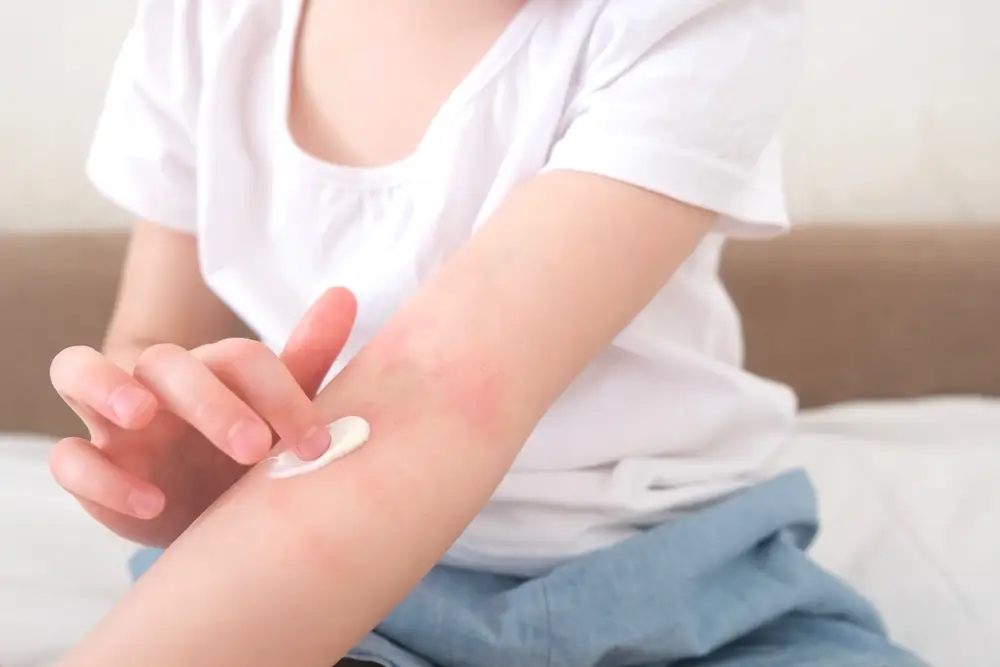
Moisturizing is the most important step in winter skin care. Apply a gentle, fragrance-free moisturizer at least twice a day or more often for babies and children with eczema. Thicker ointments or creams provide a stronger barrier against dryness.
Tip: Apply moisturizer immediately after bath time while the skin is still slightly damp to lock in hydration.
2. Use Gentle Cleansers
Harsh soaps and bubble baths can strip the skin of its natural oils and worsen dryness. Instead, choose a mild, fragrance-free cleanser, and limit baths to 10–15 minutes using lukewarm water. Avoid hot water because this can further dry out their skin.
3. Protect Skin from the Elements
When heading outdoors, make sure your child wears gloves, scarves, and hats to minimize exposure to wind and cold weather conditions. For toddlers and school-age children, lip balm with an SPF formula can protect lips from chapping and UV damage.
4. Humidify the Indoor Air
Even thought we are all trying to stay warm in these colder months, indoor heating can make the air extremely dry and cause skin irritation. Using a humidifier in your child’s bedroom, especially at night, can help maintain moisture in their skin (and airways!) and improve comfort.
5. Choose Soft, Breathable Clothing
Cotton and other soft fabrics are more gentle on sensitive skin. Avoid rough wool or synthetic fabrics that may irritate eczema-prone areas. Dressing your child in layers also helps regulate body temperature without causing them to sweat. Trapped sweat can aggravate the dry skin.
6. Avoid Irritants
Fragrances, dyes, and certain detergents can trigger skin irritations. Wash your child’s clothes with a mild, fragrance-free detergent and rinse thoroughly. Also, be careful with lotions or creams that contain perfumes or essential oils, as these can worsen their sensitive skin symptoms.
7. Keep Your Child Hydrated
Encourage your child to drink water regularly. Hydration helps keep their skin supple and can reduce dryness from the inside out. While warm drinks like herbal teas can be comforting in winter, water should still be their main source of hydration.
By following these tips, most children can stay comfortable and healthy throughout the winter months. Consistent care not only improves skin health but also reduces discomfort, irritation, and the risk of infection.

When to Seek Medical Advice
Most winter skin problems improve with at-home care, but you should contact your pediatrician if:
- Your child’s eczema or dry patches are severe, oozing, or bleeding.
- Over-the-counter moisturizers do not relieve itching or irritation.
- There are signs of infection, such as redness, swelling, or pus.
- Chapped lips or cracked skin are persistent or painful.
At Village Pediatric Group, our team can evaluate skin conditions, recommend prescription-strength creams, if needed, and provide guidance on long-term management strategies.
Final Thoughts
Winter doesn’t have to mean itchy, dry skin for your child. With gentle care, proper moisturizing, and attention to the environment, you can prevent many common winter skin issues. When in doubt, always reach out to your pediatrician. Early attention can prevent complications and make the season more enjoyable for the whole family!
Schedule a visit with Village Pediatric Group today to discuss your child’s skin health or any other pediatric concerns. Our team is here to support your child through every season!