
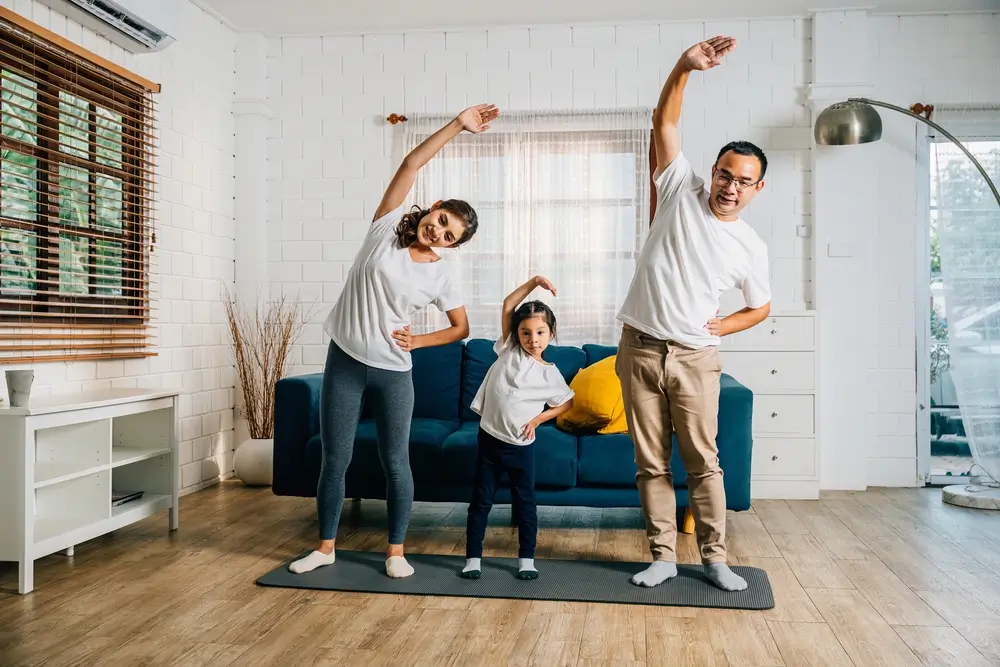

Getting kids off the couch can feel like a negotiation. We get it.
At Village Pediatric Group, we hear this from parents every week. Children are busier than ever with screens, homework, and structured activities. Yet the time they spend moving freely has dropped significantly over the past two decades.
The good news? Exercise does not have to be boring or time consuming. The best movement for kids is disguised as fun. When families move together, the habit sticks.
According to the CDC’s Physical Activity Guidelines for Americans, children aged 6 to 17 should get at least 60 minutes of moderate-to-vigorous activity every day. Most are getting far less than that.
These ideas are practical. They work in small apartments, backyards, and local parks. And they are genuinely enjoyable for kids and adults.
Why Movement Matters More Than You Think
Physical activity is not just about keeping weight in check. It supports your child’s mood, focus, sleep, and immune function.
The American Academy of Pediatrics links regular physical activity in childhood to better academic performance, reduced anxiety, and stronger social skills. Those benefits are hard to ignore.
Active kids also tend to become active adults. The movement habits formed in childhood often carry through for life.
So the time you invest now is not only about today. It is an investment in your child’s long-term health.
Fun Family Exercise Ideas That Actually Work
The best exercise is the one your child will actually do. Start here.
1. Dance Parties (Yes, Really)
Put on a playlist and move. Dancing is cardio. It improves coordination, rhythm, and mood.
Young children especially love it. Teenagers can be harder to convince, but a goofy parent often does the trick.
Ten minutes of dancing is enough to get heart rates up and energy flowing. No equipment needed.
2. Bike Rides as a Family
Cycling is low-impact and easy to scale. Younger children can ride in a trailer or on a balance bike. Older kids can tackle longer trails.
Westchester County has a solid network of bike-friendly paths. The Old Croton Aqueduct Trail and the South County Trailway are popular family options.
Even a short 20-minute loop around the neighborhood counts. Make it a weekly ritual and it becomes something kids look forward to.
3. Backyard Obstacle Courses
This one works at any age. Use jump ropes, hula hoops, pool noodles, and chalk lines to create a simple course.
Time each other. Make it competitive. Redesign it every week.
Kids engage deeply when they feel challenged and in control. An obstacle course gives them both.
4. Swimming
Swimming works the entire body. It is particularly good for children with asthma or joint concerns because it is low-impact.
Many communities in Westchester have public pools with family swim hours. Summer is an obvious time, but indoor pools are open year-round.
Even non-competitive water play counts. Splashing around for 30 minutes is more exercise than meets the eye.

5. Family Walks With a Twist
A plain walk can feel like a chore. Add a game and it becomes an adventure.
Try these variations:
• Scavenger hunt walks: give kids a list of things to spot.
• Podcast walks: listen to a kids’ science or story podcast together.
• Step challenges: race to hit a daily step count on a family fitness tracker.
• Neighborhood bingo: create a card with local landmarks and check them off.
Walking is one of the most underrated forms of movement. A 30-minute walk most days adds up quickly.
6. Active Video Games
Not all screen time is passive. Games that require physical movement can bridge the gap for screen-loving kids.
Ring Fit Adventure, Just Dance, and Nintendo Switch Sports are popular options. They are not a replacement for outdoor play, but they are far better than sitting still.
Use them as a transition activity or a rainy-day option rather than a first resort.
7. Yard or Park Sports
Kickball, tag, frisbee, four square, basketball. Simple. Free. Effective.
Organize a regular weekend game with your neighbors or relatives. Kids are more likely to participate when there is a social component.
You do not need a league or a coach. You just need a ball and some space.
8. Yoga for Kids
Children’s yoga is more engaging than you might expect. There are excellent free videos on YouTube designed specifically for kids.
Yoga improves flexibility, balance, and body awareness. It also teaches kids how to breathe through discomfort, which supports emotional regulation.
This one works especially well as a wind-down activity before bed.
How to Build Movement Into Your Week Without Overthinking It
You do not need a schedule or a plan. You need small, consistent habits.
• Park farther away and walk. Always.
• Use commercial breaks for jumping jacks or stretching.
• Make outdoor time the default after school before screens.
• Let kids lead the activity at least twice a week.
• Celebrate effort not performance. Enjoyment is the goal.
Children model what they see. If you move, they tend to move. If you frame exercise as punishment or obligation, they will resist it. Frame it as something your family simply does.
A Note on Screen Time and Activity Balance
The American Academy of Pediatrics recommends limiting recreational screen time for children aged 6 and up. You can read their full guidance here.
The goal is not to eliminate screens. It is to make sure screens are not crowding out movement, sleep, and face-to-face connection.
One practical approach: earn screen time with active time. Thirty minutes outside earns thirty minutes of a show. Keep it consistent and low-conflict.

When to Talk to Your Pediatrician About Exercise
Most healthy children can participate in any age-appropriate physical activity without restriction.
Contact us if:
• Your child experiences chest pain, shortness of breath, or dizziness during exercise.
• Your child has asthma and symptoms worsen with activity.
• Your child is consistently avoiding activity and you are not sure why.
• You have questions about appropriate exercise for a child with a chronic condition.
At Village Pediatric Group, we care for children from newborn through age 21. We are always happy to talk through what is appropriate for your child’s age, health, and development. Call our office at (914)-771-7070 or schedule a well visit.